What's included
- Free visual mold assessments
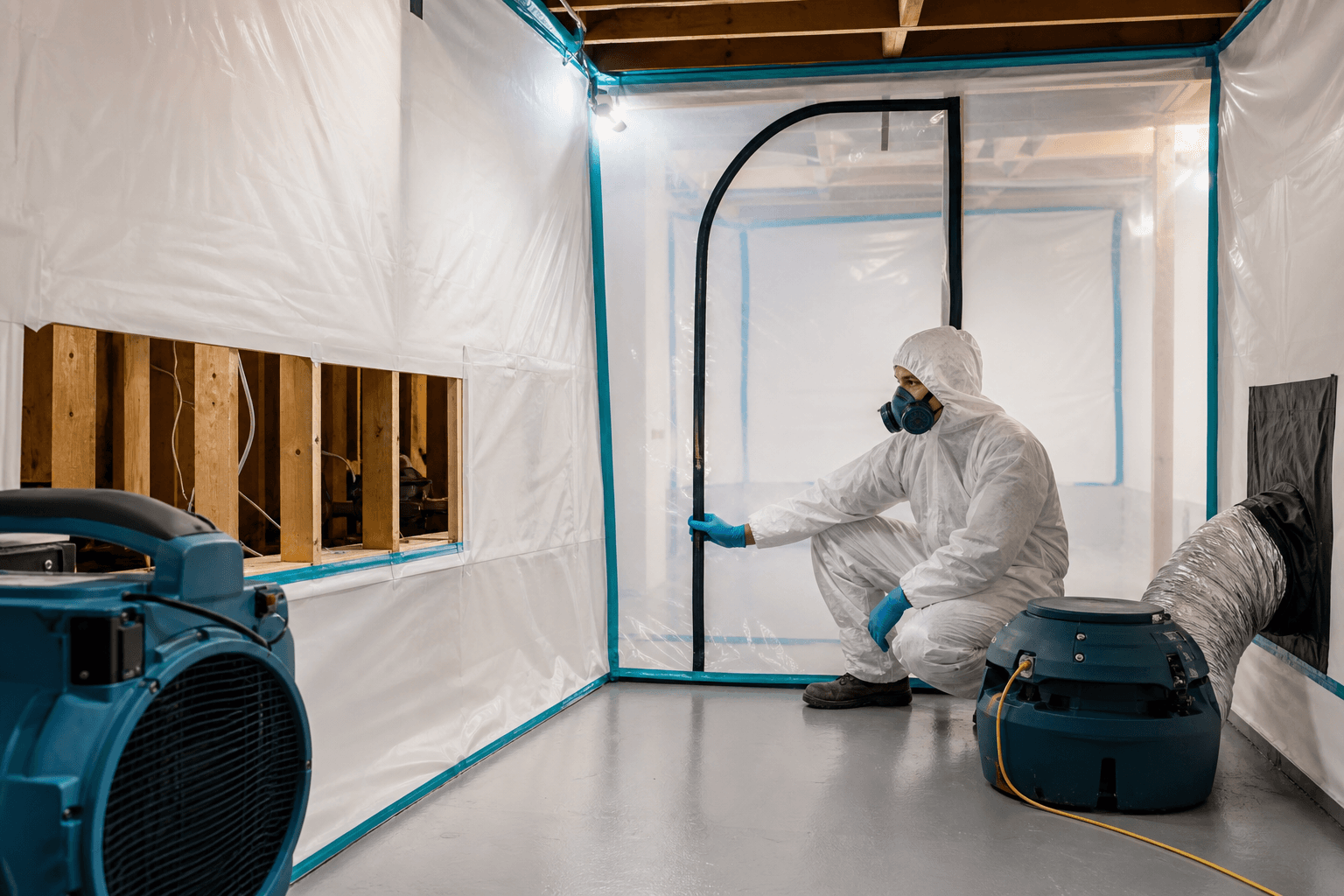
- Containment & negative air pressure
- HEPA filtration and vacuuming
- Removal of affected drywall
- Third-party air quality testing
- Moisture source repair
- Attic & crawlspace remediation
- Rebuild of removed finishes
Containment is the job
Disturbing mold without containment spreads spores through the whole house — it is how a one-wall problem becomes a whole-floor problem. We seal the work area with poly sheeting, run negative air machines exhausting through HEPA filtration, and keep the pressure differential running until the area passes clearance. In offices, stores and multi-unit buildings, the containment also has to fit around the people still using the space: see commercial mould remediation in Toronto.
Why bleach fails
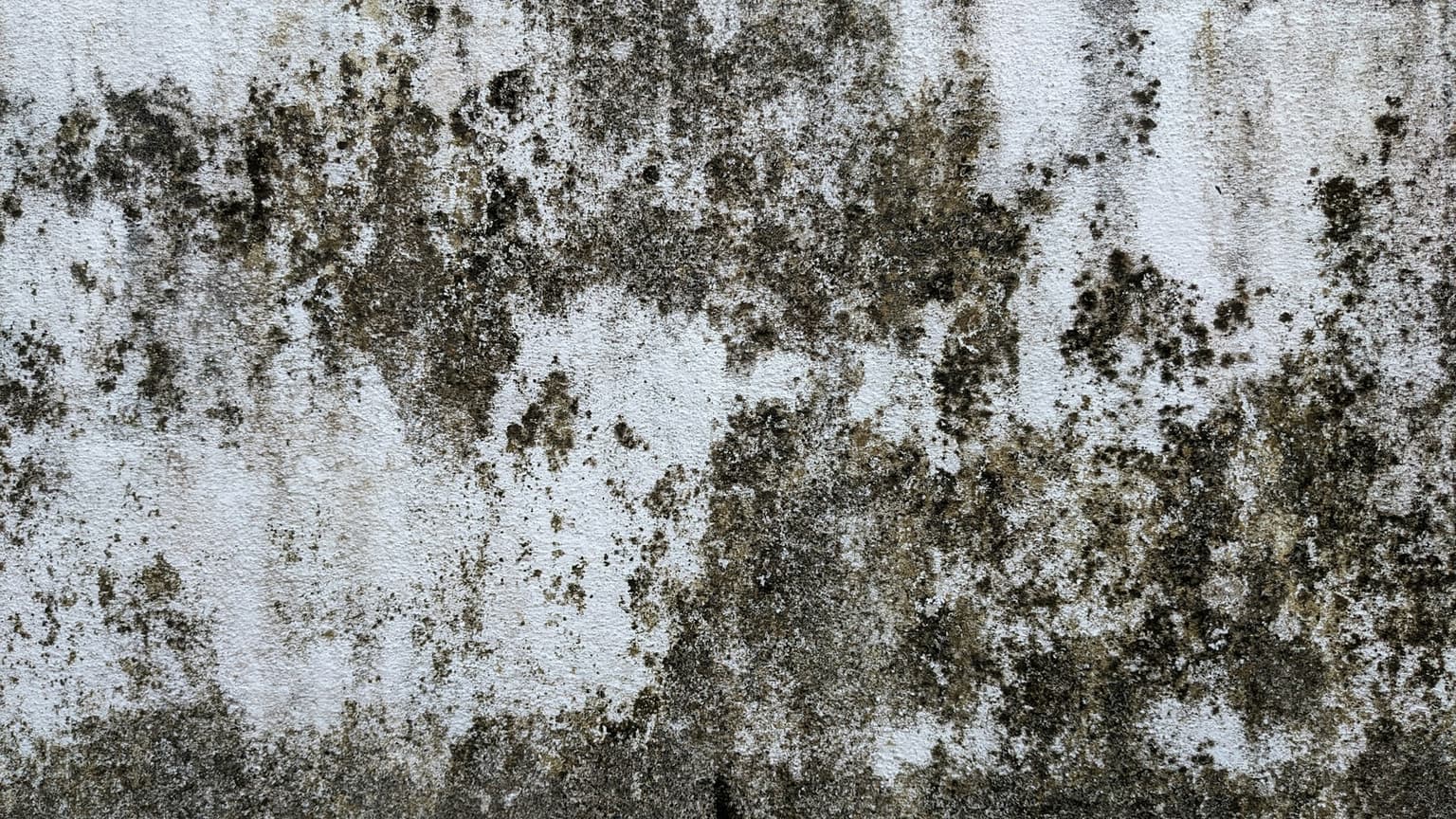
Bleach whitens the stain on the surface and leaves the root structure alive inside porous material, which is why sprayed mold comes back within months. Real remediation removes affected porous materials — drywall, insulation, carpet — and HEPA-vacuums and treats the semi-porous framing that stays. The colour of the mold matters less than people think; the extent and the source matter more.
Find the water or the mold returns
Every mold job includes a moisture investigation: plumbing leaks, foundation seepage, condensation on cold surfaces, attic ventilation failures. We fix what we can in-house, coordinate specialists where needed, and will not close a job with the source still active — that would just be scheduling a repeat visit. Growth on the underside of the roof deck has its own causes; see attic mould removal in Toronto.
Clearance you can show a buyer or a tenant
When the work is done, an independent environmental company — not us — samples the air and compares spore counts against outdoor baselines. You get a lab report stating the area passed. That document matters for real estate deals, tenant disputes, and your own peace of mind.
When a patch is small enough to clean yourself
Not every spot of mould needs a remediation company. Toronto Public Health says an area of 1 square metre or less can be cleaned with a household detergent, wearing gloves, a mask and eye protection, then dried quickly. It says about 3 square metres or less can be handled by the occupant or maintenance staff with precautions, and that 4 square metres or more should be handled by a professional trained in mould remediation. Size is not the only test: mould that keeps coming back, a musty smell with nothing visible, or growth after sewage or floodwater points to a moisture problem inside the wall, and that is where we come in. If the mould followed a leak or flood, read mould after water damage in Toronto first.
Renting in Toronto? Put the request in writing
Tenants who find mould should ask the landlord for the repair in writing and keep copies and photos of the request and any reply. If the landlord does not fix it within a reasonable time, the City of Toronto asks tenants to call 311 so the City can investigate, and a tenant can also apply to the Landlord and Tenant Board for maintenance (Form T6). Landlords and property managers can call us directly to assess and remediate the unit, and the clearance report gives both sides a written record that the work passed.
Mold removal near you, across Toronto and the GTA
We do mold removal and remediation across Toronto, including North York, Scarborough and Etobicoke, and in Mississauga, Brampton, Vaughan, Markham, Richmond Hill, Oakville, Burlington and Pickering. Mold is usually not an emergency, so visual assessments are booked within a day or two. The assessment is free, and the written scope tells you what will be contained, what will be removed and what will be cleaned before any work is booked. Find your city on our service areas page.
Questions to ask any mold remediation company
Whoever you hire, ask five things. Where is the moisture coming from, and who is fixing it? How will the work area be contained and kept under negative air? Who does the clearance test, and are they independent of the company doing the removal? Is the scope written, showing what is removed and what is cleaned in place? And can they show proof of liability insurance and WSIB coverage? A company that only sprays and paints cannot answer most of these. We can, and because we also do the repairs, the drywall, insulation and paint go back in after clearance under the same file. The repair side is covered on our property damage reconstruction page.
From our work
How these jobs usually go
Each summary combines details from many similar jobs we have done. They describe our real work, not one specific property, and leave out homeowner details for privacy.
Basement mold after a leak or flood
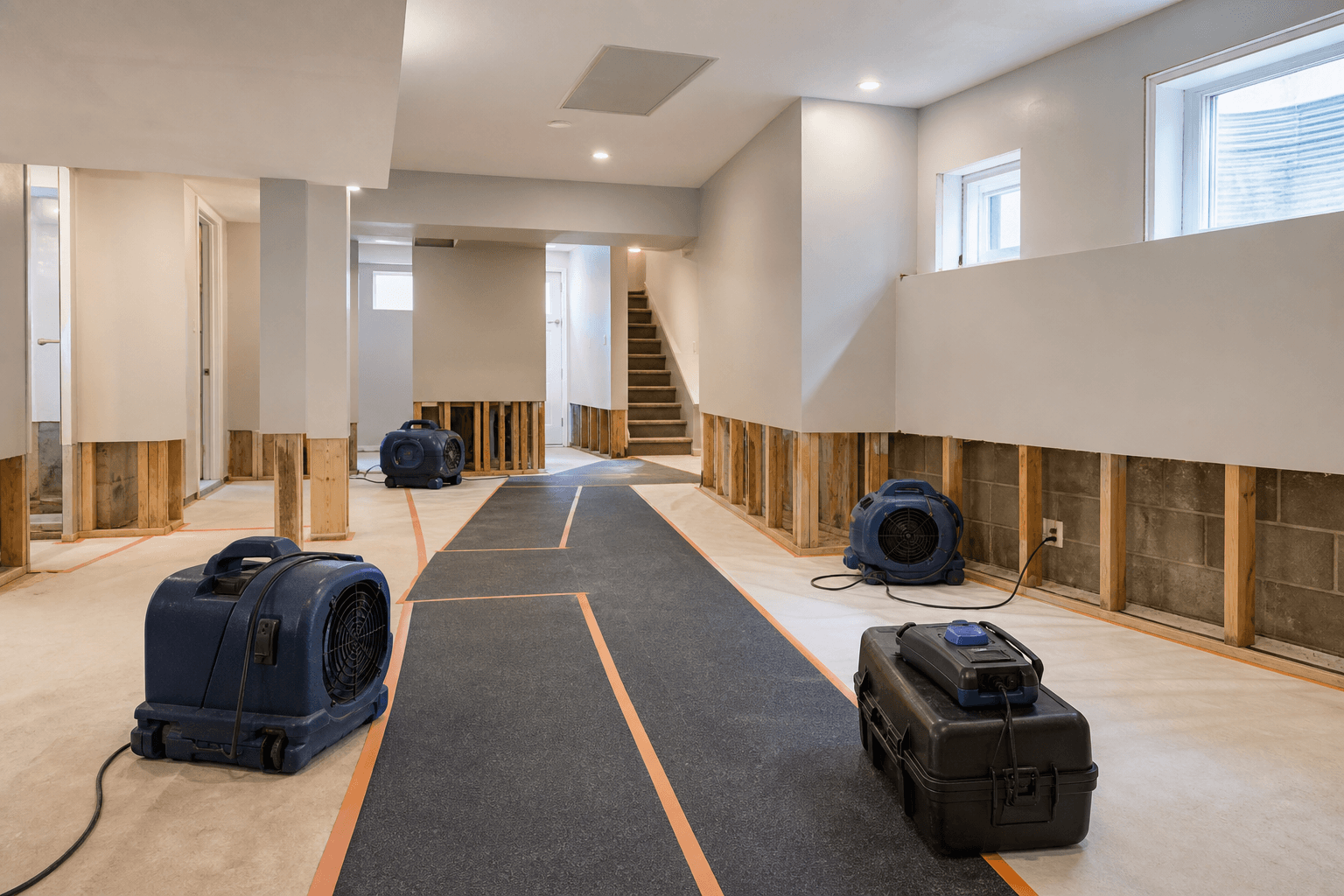
When a basement stays wet after a leak or flood, mold grows on drywall and framing, often where nobody can see it.
- Contained the area under negative air pressure
- Ran HEPA filtration and removed the affected drywall
- Had the air tested by an independent third party before removing containment
- Rebuilt the removed finishes
The basement was cleared, independently tested and rebuilt.
Attic mold from a roof leak or poor ventilation
Attic mold usually means a roof leak or poor ventilation is keeping the roof deck damp. Cleaning alone does not stop it coming back.
- Fixed the roof leak or ventilation problem first
- Remediated the mold on the roof deck and framing
The moisture source was dealt with before the cleanup, so the same problem is not left to undo the work.
Attic mould removalMold found behind a wall during a renovation
Opening a wall during a renovation sometimes uncovers mold that has been growing out of sight.
- Contained the room so dust and spores did not spread through the house
- Removed the affected material under containment
The renovation could continue once the mold was contained and removed.
Mould after water damage guideCommercial mold in occupied buildings
In offices, stores and multi-unit buildings, the work has to fit around the people still using the building.
- Planned containment around occupied areas
- Removed affected materials under containment
The building kept operating while the affected areas were remediated.
Commercial mould remediationWhat the damage and a finished repair can look like
Example photos of different properties, not a documented before-and-after of one job.
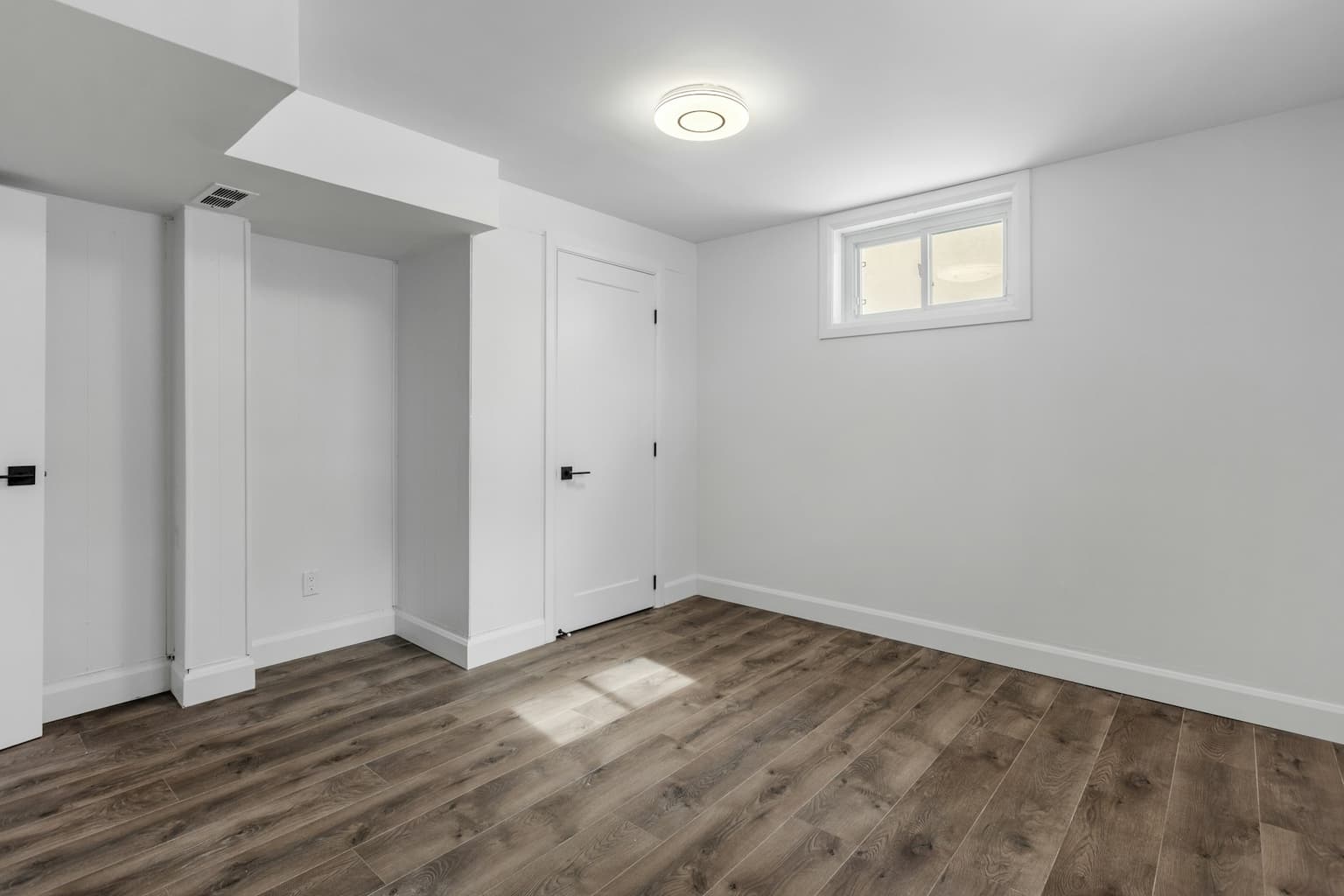
Drag to compare
Official guidance used on this page
Coverage and safety requirements vary by property and policy. Confirm decisions with the relevant authority, licensed trade, and your insurance representative.
Frequently asked questions
- How much does mold removal cost in Toronto?
- A contained single-wall remediation costs far less than an attic or a finished basement, so quotes start with a look. Visual assessments are free, we scope the containment and removal in writing, and third-party testing is quoted transparently as its own line item.
- Is mould remediation different from mold removal?
- No, it is the same service. Mould is the Canadian spelling, and remediation names the full job rather than just the cleaning: containment, removal of affected porous materials, HEPA cleaning of what stays, a fix for the moisture source and independent clearance testing. We do this work across Toronto and the GTA, starting with a free visual assessment.
- Is mold removal covered by insurance?
- When the mold resulted from a covered sudden water loss — a burst pipe you addressed promptly — remediation is often covered as part of that claim. Mold from long-term neglect or chronic seepage usually is not. We document the cause honestly either way.
- Do I need air quality testing before removal?
- Not always. If mold is visible, testing before removal mostly tells you what you already know. Pre-testing earns its cost when mold is suspected but hidden — musty smell, unexplained allergies — or when you need documentation for a landlord, buyer, or insurer. Post-remediation clearance testing, on the other hand, we always recommend.
- Can I stay home during mold remediation?
- Usually yes. The work area is sealed under negative pressure, which means air flows into the containment, not out of it. Sensitive individuals — infants, the immunocompromised, severe asthmatics — may prefer to be out during demolition days, and we schedule around that.
- Do you offer mold removal near me?
- If you are in Toronto or the GTA, very likely. We cover the City of Toronto, including North York, Scarborough and Etobicoke, plus Mississauga, Brampton, Vaughan, Markham, Richmond Hill, Oakville, Burlington and Pickering. Visual assessments are free and usually booked within a day or two.
- Can I clean a small patch of mould myself?
- Often, yes. Toronto Public Health says patches of 1 square metre or less can be cleaned with household detergent while wearing gloves, a mask and eye protection, and that 4 square metres or more should be handled by a trained professional. Call us if it returns, smells musty, or followed a flood or sewer backup.
- What causes mold in Toronto homes specifically?
- The usual suspects here: uninsulated exterior walls in older brick homes condensing in winter, bathroom fans venting into attics, finished basements over damp foundations, and the aftermath of small leaks that were dried "by eye" instead of by meter. All fixable — and worth fixing before finishing or selling.