What's included
- On site fast, day or night
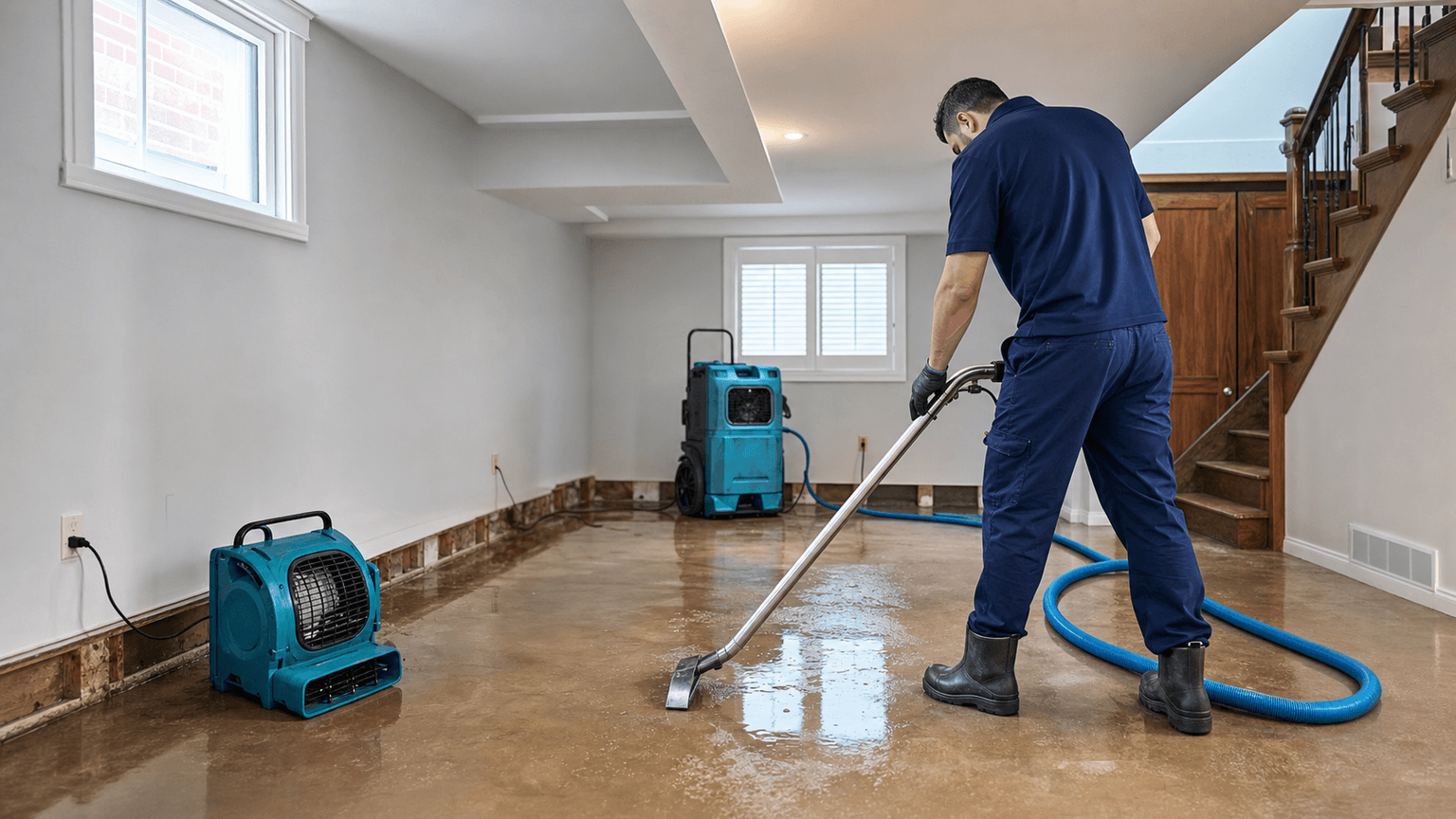
- Truck-mounted water extraction
- LGR dehumidifiers & air movers
- Thermal imaging & moisture mapping
- Daily drying logs for your insurer
- Anti-microbial treatment
- Contents moved and protected
- Repairs and rebuild included
The first 24 hours decide the claim
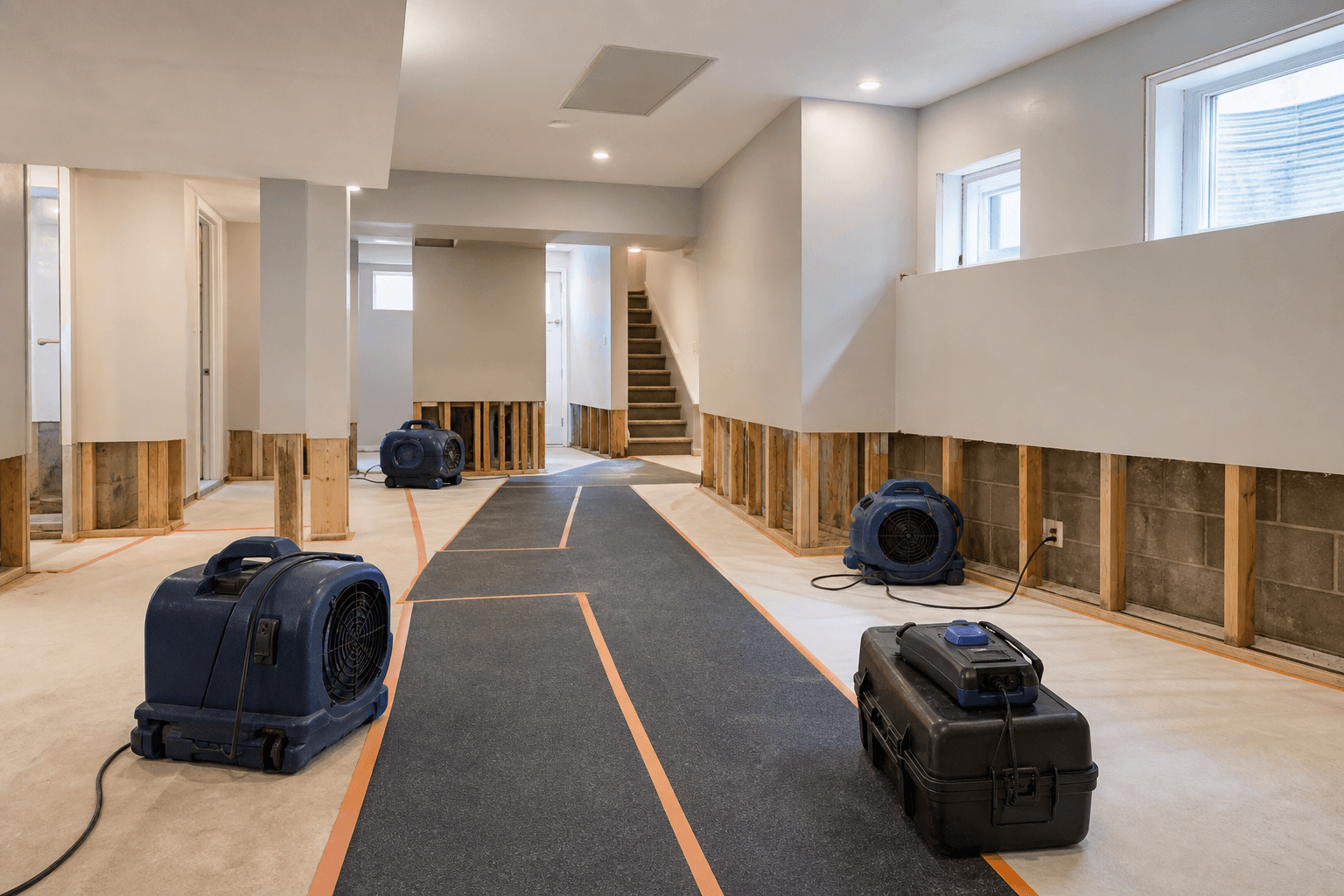
Category 1 clean water becomes Category 2 within a day or two of sitting, and wet drywall grows mold in as little as 48 hours. That is why speed matters more than anything else in a water loss. We extract standing water with truck-mounted equipment, pull baseboards to release trapped water, and get low-grain dehumidifiers and air movers running before we leave the first visit.
Dry means measured, not guessed
We map the moisture with thermal imaging and pin meters on day one, mark the wet boundary, and log readings daily until materials return to their dry standard. Those drying logs go straight into your claim file — they are the difference between an insurer approving four days of equipment and questioning it.
We restore rather than gut, where we can
Not every wet wall needs to come out. Hardwood can often be saved with panel drying, and drywall dried in place if we get there early enough. When material does have to go — saturated insulation, swollen MDF, delaminated laminate — we remove it cleanly, dispose of it, and rebuild it as part of the same job.
One file from extraction to final paint
After the drying comes the part most restoration companies hand off: repairs. We keep it in-house — insulation, vapour barrier, drywall, taping, flooring, trim, and paint. Your adjuster gets one scope, and you get one crew that already knows where every wire and pipe sits.
From our work
How these jobs usually go
Each summary combines details from many similar jobs we have done. They describe our real work, not one specific property, and leave out homeowner details for privacy.
Sewer backup in finished North York basements after a major Toronto flood
During a major Toronto flood, sewers backed up into finished basements across North York. Sewer water is contaminated, so anything porous it soaks is treated as unsalvageable.
- Extracted the standing water and removed the soaked flooring and drywall
- Cleaned and disinfected the exposed framing and concrete
- Checked framing and slab with moisture meters until they read dry
- Installed new drywall and flooring
Basements rebuilt with new walls and floors, documented for the insurance claim.
Sewage backup cleanupHeavily contaminated basement rebuilt as a new finished space
Where sewage sat longer or reached the furnace room, the damage went past the floor: walls, mechanical equipment and finishes were all affected.
- Removed contaminated flooring, walls and finishes
- Repaired or replaced affected HVAC components and ductwork
- Disinfected and dried the structure, confirmed with moisture readings
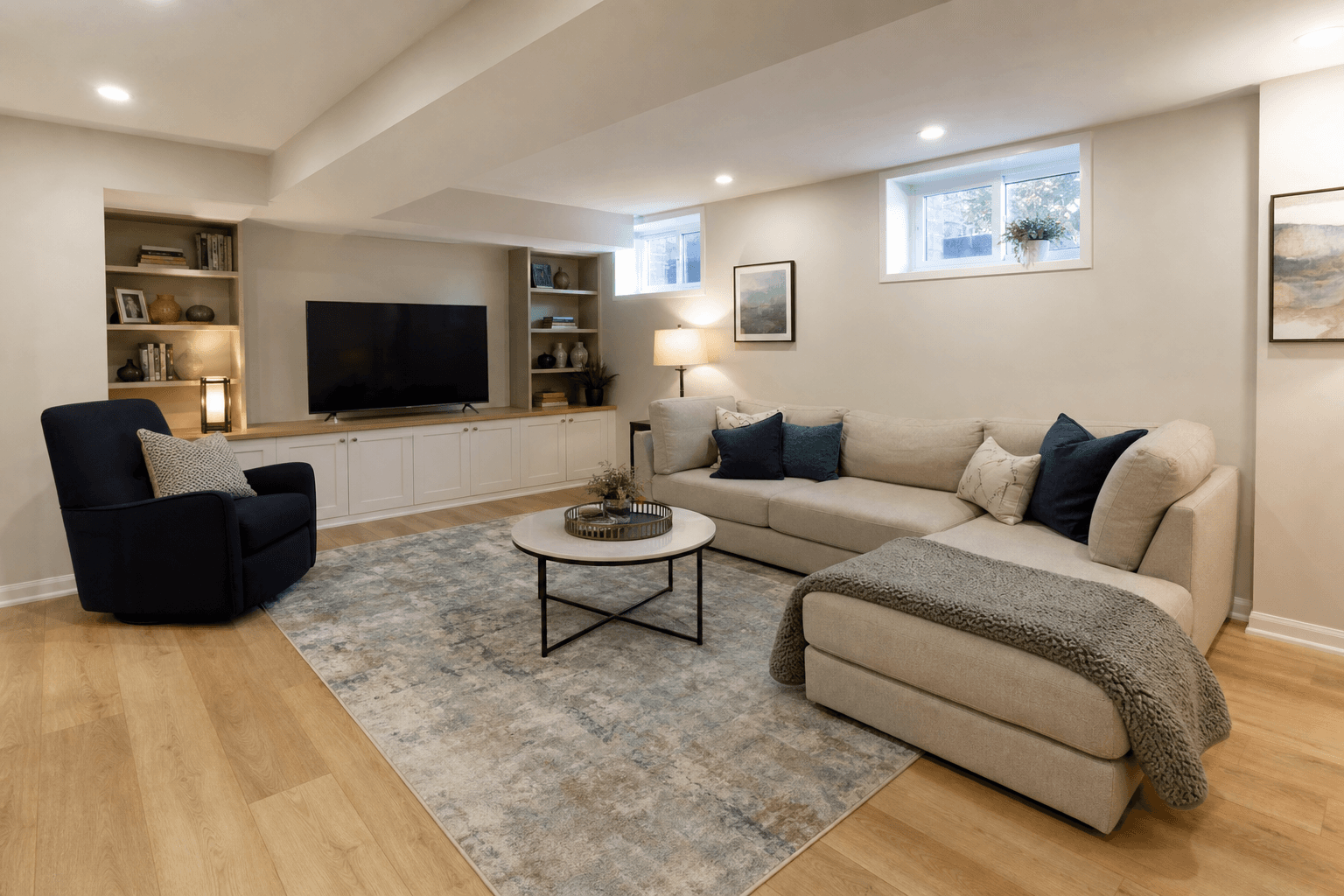
- Rebuilt the basement as a brand-new finished space
One crew handled the job from extraction through HVAC, walls, flooring and final finish.
Flooded basement cleanupBasement kitchen replaced after contaminated water
Cabinets, counters and lower finishes soak up contaminated water, and in some homes the flood reached a basement kitchen.
- Assessed how far the contamination reached before deciding what to keep
- Removed the affected cabinets, flooring and lower walls
- Dried and verified the structure with moisture meters
- Installed a new kitchen along with the walls and flooring
How much we replace depends on how contaminated the space is, not on a fixed package.
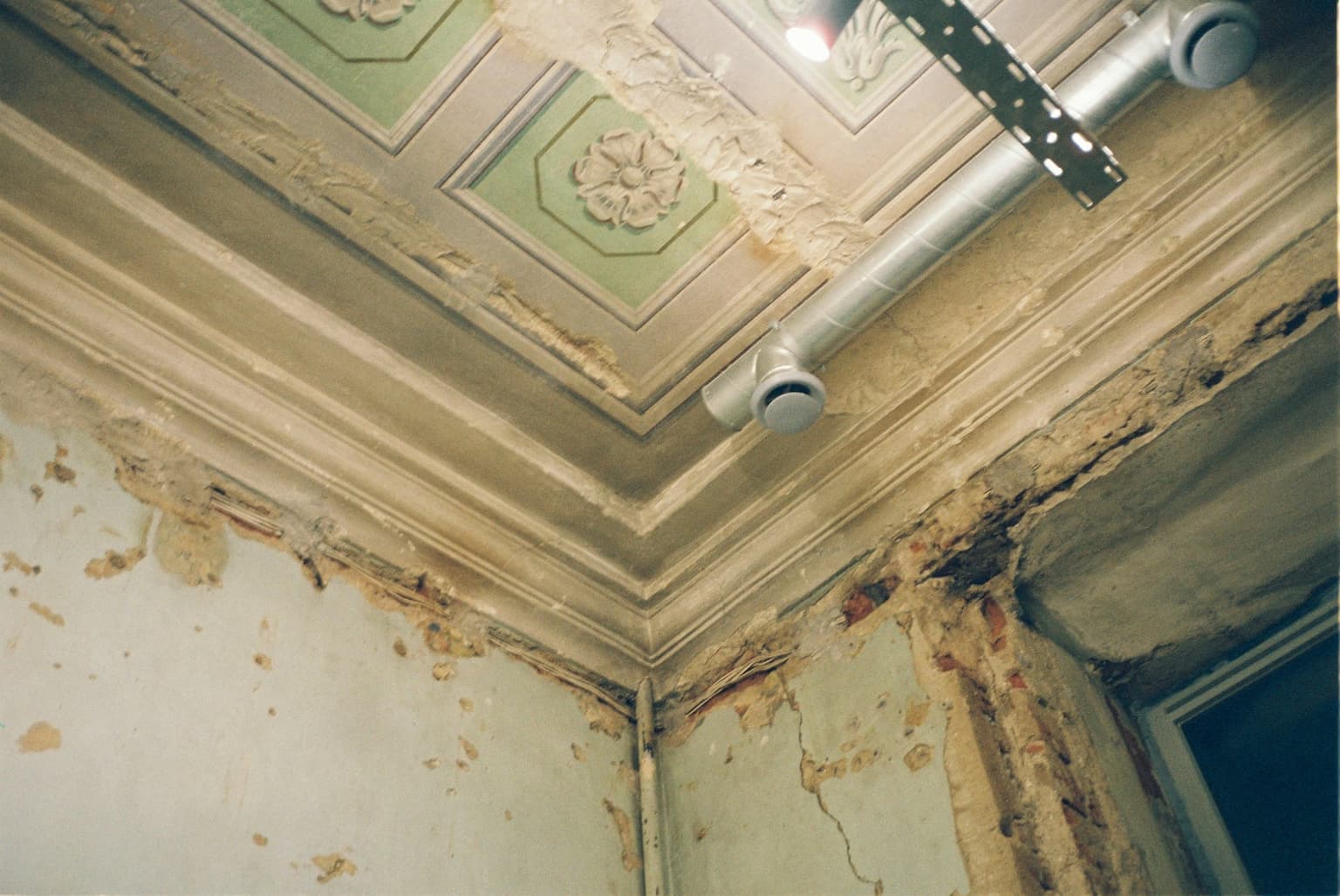
Reconstruction after a lossWhat the damage and a finished repair can look like
Example photos of different properties, not a documented before-and-after of one job.

Drag to compare