What's included
- Accessible attic and roof-deck assessment
- Moisture-source and condensation review
- Containment and controlled work area
- HEPA-filtered air and surface cleaning
- Affected material removal where required
- Roof, exhaust, insulation, and air-leakage findings
- Photo documentation of visible conditions
- Repair and prevention priorities in writing
An attic assessment has two jobs
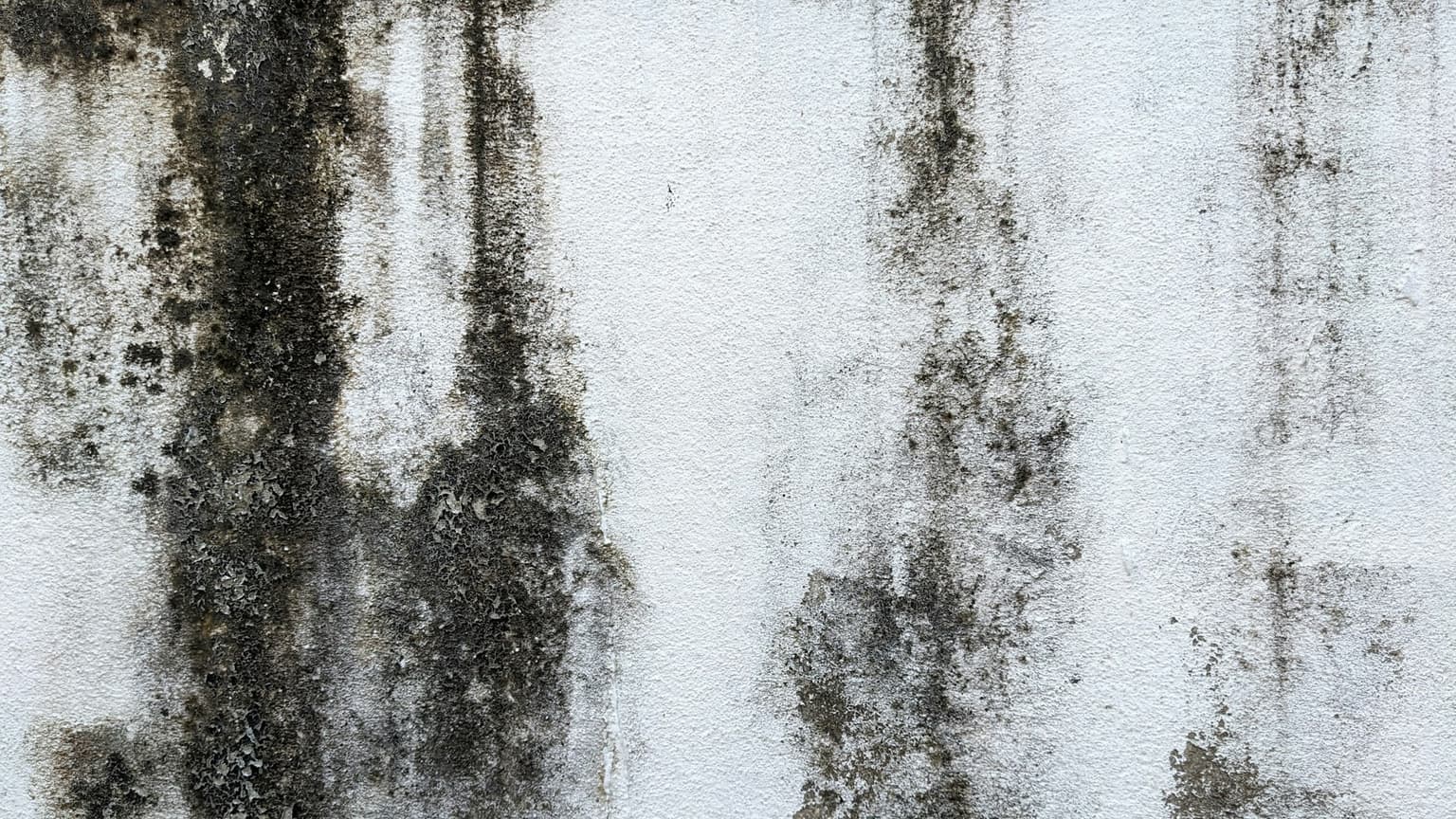
The first is to define the visible mould-affected area and the materials involved. The second is to find out why moisture collected there. Health Canada recommends inspecting attics when moisture or mould is suspected and checking for leaks, condensation, and exhaust fans that terminate in the attic. Treating the staining without addressing the moisture path leaves the same roof deck available for the next cold season.
The pattern helps separate rain entry from condensation
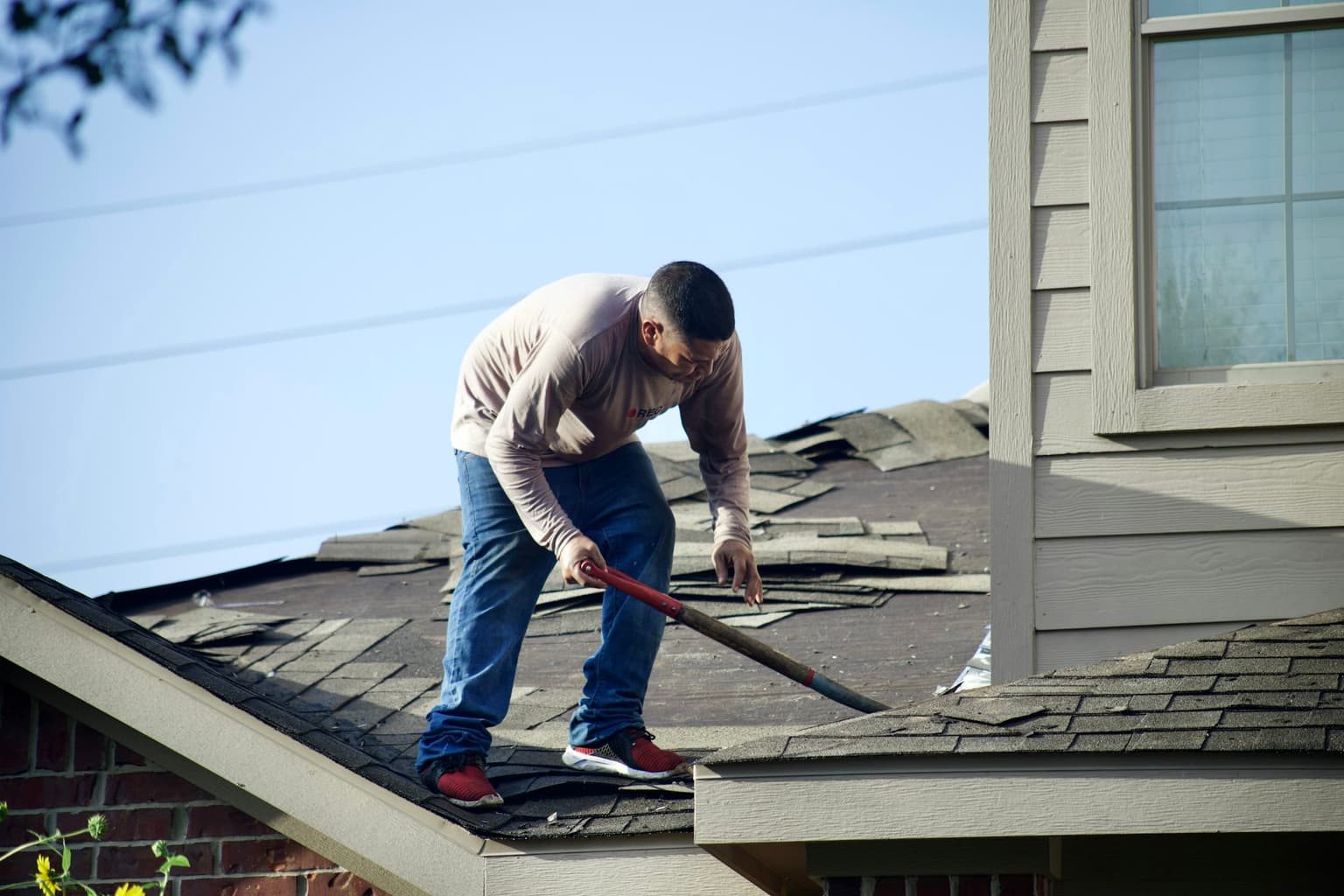
Localized staining below damaged flashing, a roof penetration, or one slope can point toward exterior water entry. Broad staining across cold sheathing, frost after a cold snap, blocked soffit paths, or darkened insulation near ceiling penetrations can point toward warm indoor air reaching the attic. These are working findings, not assumptions; a roofer, insulation contractor, HVAC technician, or other qualified trade may be needed to confirm and correct the source.
Remediation scope follows extent and material condition
A useful scope records the affected surfaces, access limits, containment route, cleaning or removal method, waste handling, and adjacent insulation condition. Sound wood and severely deteriorated material do not receive the same treatment. Coating over visible growth is not a substitute for removal or cleaning, and any encapsulant considered after remediation should have a defined purpose rather than being used to hide an unfinished surface.
Containment protects the occupied part of the house
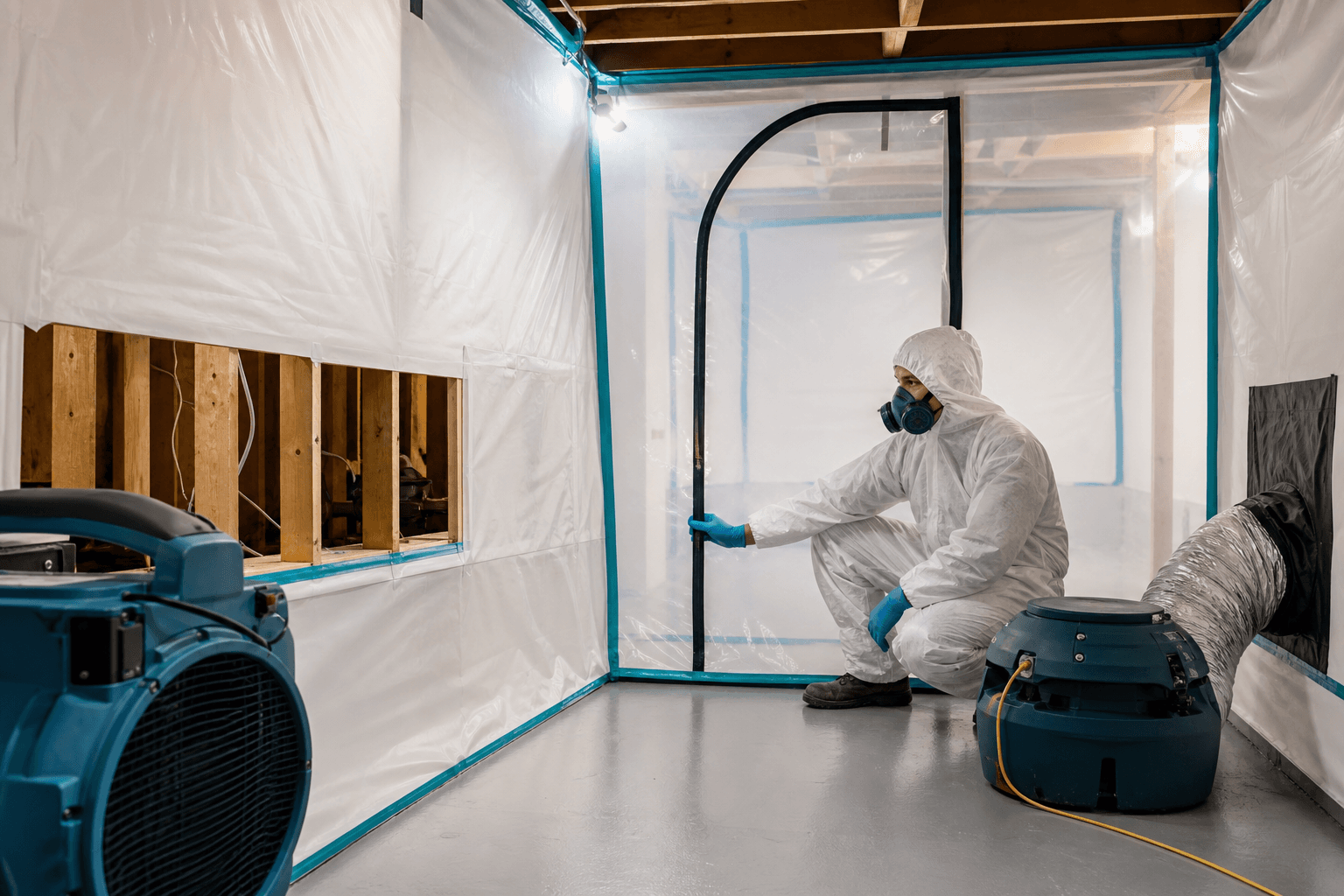
Attic access often opens into a hallway, bedroom, or closet. The work plan can isolate that opening, protect the route through the home, use HEPA-filtered negative air where appropriate, and clean the work zone before containment comes down. Access, electrical wiring, low clearances, roofing nails, heat, and weak surfaces also affect how the attic can be worked in safely.
Air testing is not the automatic first step
Health Canada generally recommends a systematic visual and moisture inspection instead of routine air testing because a sample often says little about the cause. Testing may be considered when concerns remain unexplained or an independent professional needs it for a specific question. We keep the physical remediation scope separate from any independent post-remediation evaluation so the purpose and responsibility stay clear.
Closeout should name the next trade, not promise recurrence away
Completion documentation should show the areas addressed, material removed, visible final condition, limitations, and source-correction items still open. That may mean roof or flashing repair, sealing ceiling penetrations, correcting a bath fan duct, restoring soffit airflow, or reviewing insulation. Natural Resources Canada cautions that adding ventilation alone does not solve moisture carried into an attic by air leakage, so the next step must fit the actual pattern.
From our work
How these jobs usually go
Each summary combines details from many similar jobs we have done. They describe our real work, not one specific property, and leave out homeowner details for privacy.
Basement mold after a leak or flood
When a basement stays wet after a leak or flood, mold grows on drywall and framing, often where nobody can see it.
- Contained the area under negative air pressure
- Ran HEPA filtration and removed the affected drywall
- Had the air tested by an independent third party before removing containment
- Rebuilt the removed finishes
The basement was cleared, independently tested and rebuilt.
Mold removalAttic mold from a roof leak or poor ventilation
Attic mold usually means a roof leak or poor ventilation is keeping the roof deck damp. Cleaning alone does not stop it coming back.
- Fixed the roof leak or ventilation problem first
- Remediated the mold on the roof deck and framing
The moisture source was dealt with before the cleanup, so the same problem is not left to undo the work.
Mold found behind a wall during a renovation
Opening a wall during a renovation sometimes uncovers mold that has been growing out of sight.
- Contained the room so dust and spores did not spread through the house
- Removed the affected material under containment
The renovation could continue once the mold was contained and removed.
Mould after water damage guideCommercial mold in occupied buildings
In offices, stores and multi-unit buildings, the work has to fit around the people still using the building.
- Planned containment around occupied areas
- Removed affected materials under containment
The building kept operating while the affected areas were remediated.
Commercial mould remediationOfficial guidance used on this page
- Health Canada: guide to addressing moisture and mould indoors
- Natural Resources Canada: Keeping the Heat In — roofs and attics
Coverage and safety requirements vary by property and policy. Confirm decisions with the relevant authority, licensed trade, and your insurance representative.