
Mould After Water Damage: What to Dry, Remove, and Investigate
A wall can look dry while the cavity, insulation, or bottom plate is still wet. Start with the water source and moisture boundary, then decide what can be dried, what must be removed, and whether the scope needs professional assessment.
Written and operationally reviewed by the Emergency Restoration team.
Published 2026-08-23 · Updated 2026-08-23 · 11 min read
01
The 48-hour window is a response target, not a pass-or-fail test
Health Canada says a house and its contents are less likely to grow mould when they are dried within 48 hours. That is a reason to start extraction and drying promptly. It does not mean every material is safe on hour 47 or automatically contaminated on hour 49.
The actual decision depends on the water source, material, temperature, airflow, how long the assembly stayed wet, and whether moisture remains trapped. Record when the loss was discovered, when the source stopped, and when drying began. If the start time is unknown, treat that uncertainty as part of the assessment rather than inventing a clean timeline.
02
Stop the water and identify what was in it
A roof leak, clean supply-line break, appliance discharge, groundwater entry, and sewage backup do not create the same cleanup problem. Shut off or repair the source through the appropriate plumber, roofer, utility, building manager, or other qualified party before relying on dehumidifiers.
Contaminated water changes what can be safely handled and retained. Health Canada recommends professional involvement when a flood or significant leak contains sewage or chemical or biological pollutants. Do not use a household mould-cleaning plan for sewage-exposed drywall, carpet, insulation, or contents.
03
Map the wet boundary beyond the visible stain
Water follows gravity, framing, flooring seams, fasteners, insulation, and service openings. The dark patch on the ceiling may be below a much wider wet cavity. Baseboards can look dry while the lower drywall edge and sill plate remain damp.
Begin with wide photographs and a room-by-room path from the source. Moisture readings and selective access can then test the suspected boundary in ceilings, walls, floors, cabinets, and neighbouring rooms. Mark and date the findings so the drying or removal scope is based on a changing record, not a single first-day reading.
04
Look for hidden mould where water is known to have travelled
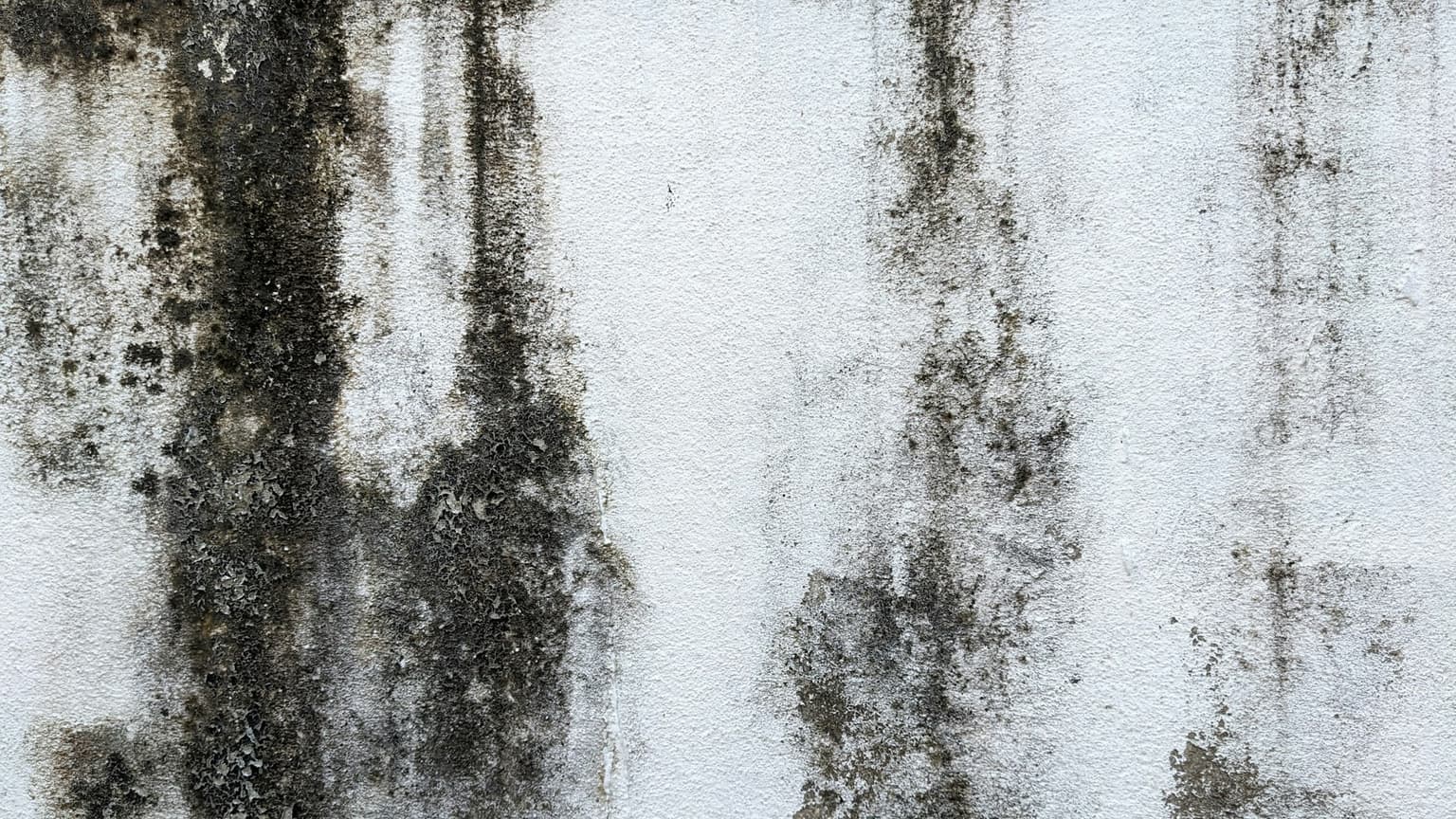
Health Canada notes that mould can grow behind walls and above ceiling tiles. Warning signs include musty or earthy odour, staining, peeling paint, wrinkled finishes, warped wood, dampness, and recurring discolouration. A clean painted surface does not rule out the back of the drywall or wet insulation.
Strong odour without visible growth, repeated staining, or water that entered a wall, ceiling, or floor cavity calls for further investigation. Opening an assembly should be planned so dust and affected material are not spread through an occupied home. Random holes are not a substitute for tracing the water route.
05
Colour does not set the cleanup scope
Black, green, white, or orange growth should not be used to guess health risk or choose a removal method. Health Canada recommends cleaning up visible mould regardless of type and says the extent of growth, duration, and occupant susceptibility matter.
Routine air testing is also not the starting point. Health Canada does not recommend air testing for mould in most situations because it often says little about the cause or health effects. A systematic inspection for moisture, visible growth, odour, and affected materials is usually more useful. A qualified professional may recommend targeted testing when a specific unresolved question remains.
06
Drywall can sometimes dry—but mould behind paint changes the decision
Drywall that became wet briefly from relatively clean water may be evaluated for in-place drying when it remains sound, the cavity is accessible to dry, and measured progress is documented. Swelling, crumbling, delamination, prolonged wetness, contamination, or inaccessible wet insulation can make removal the practical route.
Health Canada specifically advises that drywall with mould underneath the paint needs removal and replacement. Painting over mould only hides it temporarily. The cut line should follow the affected material and access needed to inspect and clean the cavity—not an arbitrary strip chosen because it is easy to patch.
07
Small surface cleanup and a building-wide problem are different jobs
Health Canada categorizes a small amount as no more than three patches with a combined area of one square metre or less. It recommends qualified professional assessment and cleanup when a single patch is larger than three square metres, and professional input for recurring growth, hidden contamination, contaminated floodwater, or water inside cavities that cannot be dried conventionally.
Several small patches in different rooms can point to a larger humidity or building problem even when no individual patch is large. Measure the total visible extent, note odour, and include concealed areas suspected from the water path. Do not break one connected problem into small labels to avoid an appropriate containment and assessment plan.
08
Control dust and air movement before removal starts
Pulling mouldy drywall without a work-area plan can move dust into clean rooms, return-air openings, furniture, and contents. Decide how the area will be isolated, how debris will leave, which HVAC openings need protection, and how workers and occupants will be separated before demolition.
Health Canada advises proper protective equipment and physical removal of mould-damaged material under safe conditions. It also says not to use bleach for mould cleanup. The method should match the material and size of the problem; spraying a surface is not a substitute for removing damaged porous material or correcting the moisture source.
09
Occupant health belongs in the work plan
Health Canada identifies infants, children, seniors, pregnant people, people with asthma or other respiratory conditions, and people with greater health susceptibility as groups that may face higher risk from damp and mouldy conditions. Health questions belong with a healthcare professional, not a restoration estimate.
Tell the assessor who occupies the property and whether anyone has been advised to avoid the area. Plan access, containment, temporary relocation if needed, and cleaning of adjacent spaces accordingly. A contractor should not diagnose symptoms or promise that remediation will resolve a medical condition.
10
Completion means the moisture source and affected material are resolved
Before reconstruction, confirm that the leak or humidity cause is corrected, damaged material is removed or cleaned as scoped, remaining assemblies meet the project’s drying criteria, and the work area is visibly clean. Keep photographs, moisture records, disposal documentation, and any independent review required for a larger project.
Mould that returns usually signals unresolved moisture. Toronto Public Health likewise says the underlying water accumulation or prolonged humidity must be corrected or growth will recur. Rebuilding over a damp cavity, missing roof repair, slow plumbing leak, or uncontrolled basement humidity only resets the clock.
From our work
How these jobs usually go
Each summary combines details from many similar jobs we have done. They describe our real work, not one specific property, and leave out homeowner details for privacy.
Basement mold after a leak or flood
When a basement stays wet after a leak or flood, mold grows on drywall and framing, often where nobody can see it.
- Contained the area under negative air pressure
- Ran HEPA filtration and removed the affected drywall
- Had the air tested by an independent third party before removing containment
- Rebuilt the removed finishes
The basement was cleared, independently tested and rebuilt.
Mold removalAttic mold from a roof leak or poor ventilation
Attic mold usually means a roof leak or poor ventilation is keeping the roof deck damp. Cleaning alone does not stop it coming back.
- Fixed the roof leak or ventilation problem first
- Remediated the mold on the roof deck and framing
The moisture source was dealt with before the cleanup, so the same problem is not left to undo the work.
Attic mould removalMold found behind a wall during a renovation
Opening a wall during a renovation sometimes uncovers mold that has been growing out of sight.
- Contained the room so dust and spores did not spread through the house
- Removed the affected material under containment
The renovation could continue once the mold was contained and removed.
Commercial mold in occupied buildings
In offices, stores and multi-unit buildings, the work has to fit around the people still using the building.
- Planned containment around occupied areas
- Removed affected materials under containment
The building kept operating while the affected areas were remediated.
Commercial mould remediationSources and limits
Official references checked for this guide
- Health Canada — Guide to addressing moisture and mould indoors
- Health Canada — Flood cleanup and indoor air quality
- Toronto Public Health — Mould
This guide is general property-restoration information, not legal, insurance, medical, electrical, or engineering advice. Conditions and program rules can change; confirm decisions with the relevant authority and qualified professional.