Toronto Basement Flooding Subsidy: What Changed in 2026
The City expanded the program on May 1, 2026. Here is what the subsidy can cover, which paperwork matters, and why an active basement flood still needs to be handled before prevention work begins.
Written and operationally reviewed by the Emergency Restoration team.
Published 2026-08-03 · Updated 2026-08-03 · 8 min read
01
The short version
As of May 1, 2026, the City of Toronto says eligible property owners can receive up to $6,650 per property through the expanded Basement Flooding Protection Subsidy Program. The expanded amounts apply to eligible work completed on or after November 12, 2025.
The program is for prevention work. It does not replace emergency extraction, sewage cleanup, structural drying, damaged-finish repair, or an insurance claim after water is already inside. If the basement is wet now, deal with electrical and contamination hazards, stop the source where safe, document the condition, and begin cleanup. The backwater-valve or sump-pump project comes after the immediate loss is stable.
02
What the expanded program can help pay for
The City lists four categories of eligible work: a one-time home plumbing assessment; backwater valves and alarms; a sump pump, alarm, and battery backup; and severing and capping certain storm-sewer or external weeping-tile connections. Each category has its own percentage limit, device limit, and lifetime maximum.
The total headline amount does not mean every property automatically receives $6,650. Reimbursement depends on the eligible work completed, invoiced cost, application requirements, prior subsidies at the property, contractor qualifications, permits, inspections, and the City’s review. Read the current program page before signing a contract because forms, maximums, and eligibility rules can change.
- Home plumbing assessment: up to 80% of the invoice, to the City’s current maximum.
- Backwater valves: eligible device, alarm, labour, material, and tax costs within program limits.
- Sump pump and battery backup: separate itemization is important when both are installed.
- Foundation-drain or storm-sewer disconnection: only the eligible work described by the City qualifies.
03
Do not cover the backwater valve before inspection
The City requires a building permit for a backwater-valve installation and says the valve must remain visible until the inspection is complete. Closing the floor or finishing around the valve too early can create avoidable rework. A good sequence is assessment, contractor and permit confirmation, installation, inspection, photographs, then finish repair.
For sump-pump work, keep photographs of the pump and exterior discharge. When a battery backup is part of the project, ask the contractor to show the costs separately on the invoice. Save paid invoices, permit and inspection records, photographs, contractor information, and any forms the City requests in one folder before applying.
04
A backwater valve changes how the house behaves during a storm
A backwater valve is designed to close when sewage is pushing the wrong way through the line. While it is closed, wastewater from toilets, sinks, showers, dishwashers, and washing machines cannot leave normally. The City advises homeowners not to use plumbing fixtures while the valve is closed because the home can back up into itself.
That is why an alarm and a simple household plan matter. Everyone should know where the valve is, what its alarm means, and who maintains it. A device hidden under stored boxes and never inspected is not a complete flood plan.
05
A sump pump needs a discharge plan and backup power
A sump pump collects and removes water from the foundation-drain system. The discharge must send water to an appropriate location away from the foundation rather than cycling it back toward the house. The City’s guidance says the outlet should discharge to a permeable surface at least two metres from the foundation wall.
Power failures often arrive with severe storms, which is exactly when the pump may be needed most. A battery backup does not remove the need for maintenance, but it gives the system another path when utility power is unavailable. Test and maintain the pump and backup according to the manufacturer’s instructions.
06
What to do if the basement is flooding now
Do not walk into water near electrical equipment, outlets, appliances, or a submerged panel. Keep children and pets away. If sewage may be involved, avoid direct contact and do not treat it like ordinary rainwater. Call 311 about municipal sewer issues, contact your insurer, and call qualified emergency help.
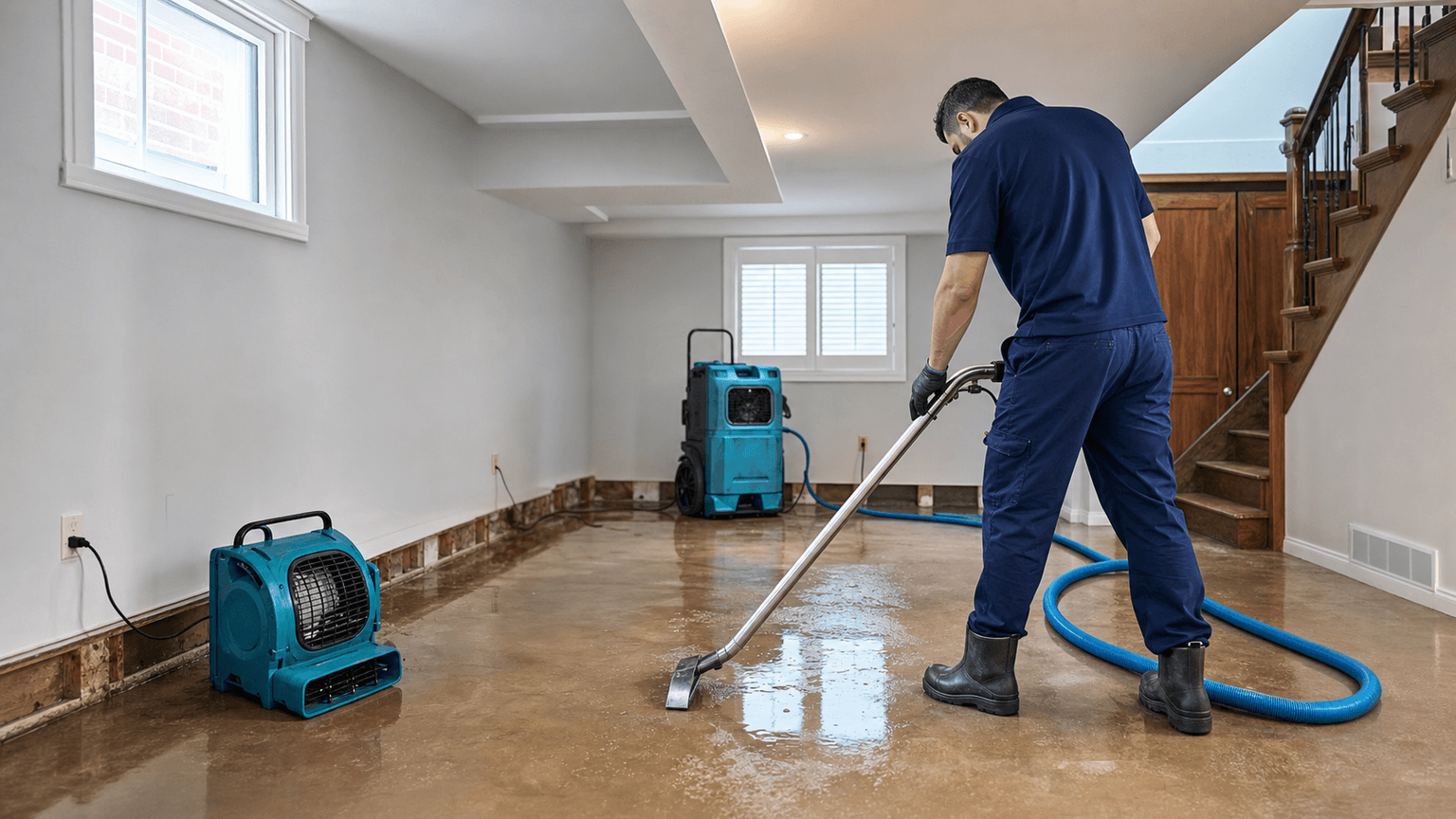
Photograph the water line, source area, damaged rooms, contents, equipment labels, and visible contamination before moving items when it is safe to do so. Emergency Restoration can extract water, remove contaminated material, dry the structure, and build the repair scope. Prevention work can be planned after the property is safe and the cause is understood.
Sources and limits
Official references checked for this guide
- City of Toronto — Basement Flooding Protection Subsidy Program
- City of Toronto — Basement flooding safety and prevention
This guide is general property-restoration information, not legal, insurance, medical, electrical, or engineering advice. Conditions and program rules can change; confirm decisions with the relevant authority and qualified professional.