Water Damage in Toronto: What to Do in the First 24 Hours
The first day is not about rebuilding. It is about keeping people safe, stopping more water, documenting what happened, and beginning controlled removal and drying.
Written and operationally reviewed by the Emergency Restoration team.
Published 2026-08-07 · Updated 2026-08-07 · 10 min read
01
First question: is it safe to enter?
Do not step into water where electrical equipment, outlets, extension cords, appliances, a panel, or damaged wiring may be energized. The Electrical Safety Authority warns that water-exposed electrical equipment and wiring can create shock and fire hazards and must be evaluated before being placed back into service.
If floodwater reached electrical equipment and the main power was not already shut off from a dry, safe location, stay out until a qualified electrician or emergency authority says entry is safe. Do not stand in water to reach a breaker. Leave immediately for structural movement, a gas odour, visible fire, or a carbon-monoxide alarm and contact the appropriate emergency service.
02
Stop the source without creating a second emergency
For a supply-line leak or burst pipe, close the nearest safe fixture valve or the building’s main water shutoff if you know its location and can reach it without electrical or structural risk. For roof, foundation, storm, drain, or sewer entry, avoid improvised work in active weather or contaminated water.
In a condo or rental, notify building management or the property owner immediately because the shutoff, riser, drain, roof, or source may serve more than one unit. Record when the leak was discovered, when the source was stopped, and who was notified.
03
Treat the water source as part of the cleanup plan
A clean supply-line release, rainwater entering after travelling through building materials, and a sewage backup do not create the same exposure or material decisions. Water can also pick up contamination as it moves through ceilings, insulation, floors, soil, drains, stored chemicals, or waste.
Keep children, pets, and unprotected occupants away from sewage, visibly dirty water, and affected porous materials. Do not use a household vacuum for standing water. Restoration scope, personal protective equipment, cleaning, and disposal should match the actual source and path rather than the colour of the water alone.
04
Document the event before the room changes
Take wide photographs of each affected room, then closer images of the source, water line, ceilings, walls, floors, built-ins, contents, and equipment. Short video can show active dripping, standing water, and the route water travelled. Photograph model and serial numbers when safe and useful.
Start a simple timeline with discovery, shutoff, emergency calls, building notifications, weather conditions, contractors contacted, and work authorized. Save receipts and written communications. Documentation should not delay emergency safety work or water removal, but a few organized minutes can make the later conversation much clearer.
05
Call the insurer or property contact early
Report the loss through the insurer’s published claim channel and ask what immediate mitigation, documentation, emergency limits, adjuster contact, and disposal process apply. Coverage depends on the policy, cause, endorsements, exclusions, and facts; a restoration contractor should not promise what an insurer will pay.
If the property is rented, shared, commercial, or part of a condominium, there may be several policies and responsibilities. Notify the appropriate owner, manager, board, or tenant promptly and keep the restoration scope separate from decisions about coverage.
06
Begin extraction and controlled drying as soon as it is safe
Health Canada says wet homes and furnishings are less likely to grow mould when dried within 48 hours. That does not mean every material can simply be left in place with a fan. Standing water, wet insulation, carpet pad, drywall, flooring assemblies, cabinets, and concealed cavities need assessment based on source, exposure, condition, and whether they can actually be cleaned and dried.
Extraction removes bulk water. Air movement and dehumidification then address evaporation and humidity. Outdoor windows are not automatically the right answer; warm humid air can slow drying. Equipment placement should account for electrical capacity, containment, occupied areas, and safe condensate discharge.
07
Do not use fuel-powered drying equipment indoors
Health Canada warns that gasoline-, kerosene-, and propane-powered pumps or heaters can create lethal carbon monoxide when used in poorly ventilated spaces. Equipment designed for outdoor use stays outdoors. Maintain working certified carbon-monoxide alarms while the property is being dried.
Extension cords, pumps, heaters, and dehumidifiers also add electrical load in an already wet environment. Use properly rated equipment and circuits that have been confirmed safe. If the electrical system was exposed to water, follow ESA and licensed-electrical-contractor direction before reconnecting or operating affected equipment.
08
Move priority contents; do not discard everything blindly
When access is safe, move dry or lightly affected documents, electronics, artwork, medication, identification, and sentimental items away from continuing moisture. Use clean containers and label where items came from. Do not carry contaminated materials through unaffected rooms without a containment and cleaning plan.
Some porous items exposed to floodwater cannot be safely cleaned or dried and may need disposal. Before removing high-value or claim-related contents, photograph them and follow the insurer or responsible property contact’s instructions unless immediate disposal is required for health or safety.
09
The first 24 hours should end with a written next step
By the end of the first day, the useful deliverable is not a reconstruction promise. It is a documented source, known safety status, affected-area map, initial moisture findings, extraction record, drying or removal plan, equipment list, access plan, and the next inspection time.
Drying progress should be checked with measurements and observations, not judged only by a surface that feels dry. Once affected assemblies reach an appropriate condition and contaminated or unsalvageable material has been addressed, repair scope can be developed without trapping moisture behind new finishes.
From our work
How these jobs usually go
Each summary combines details from many similar jobs we have done. They describe our real work, not one specific property, and leave out homeowner details for privacy.
Sewer backup in finished North York basements after a major Toronto flood
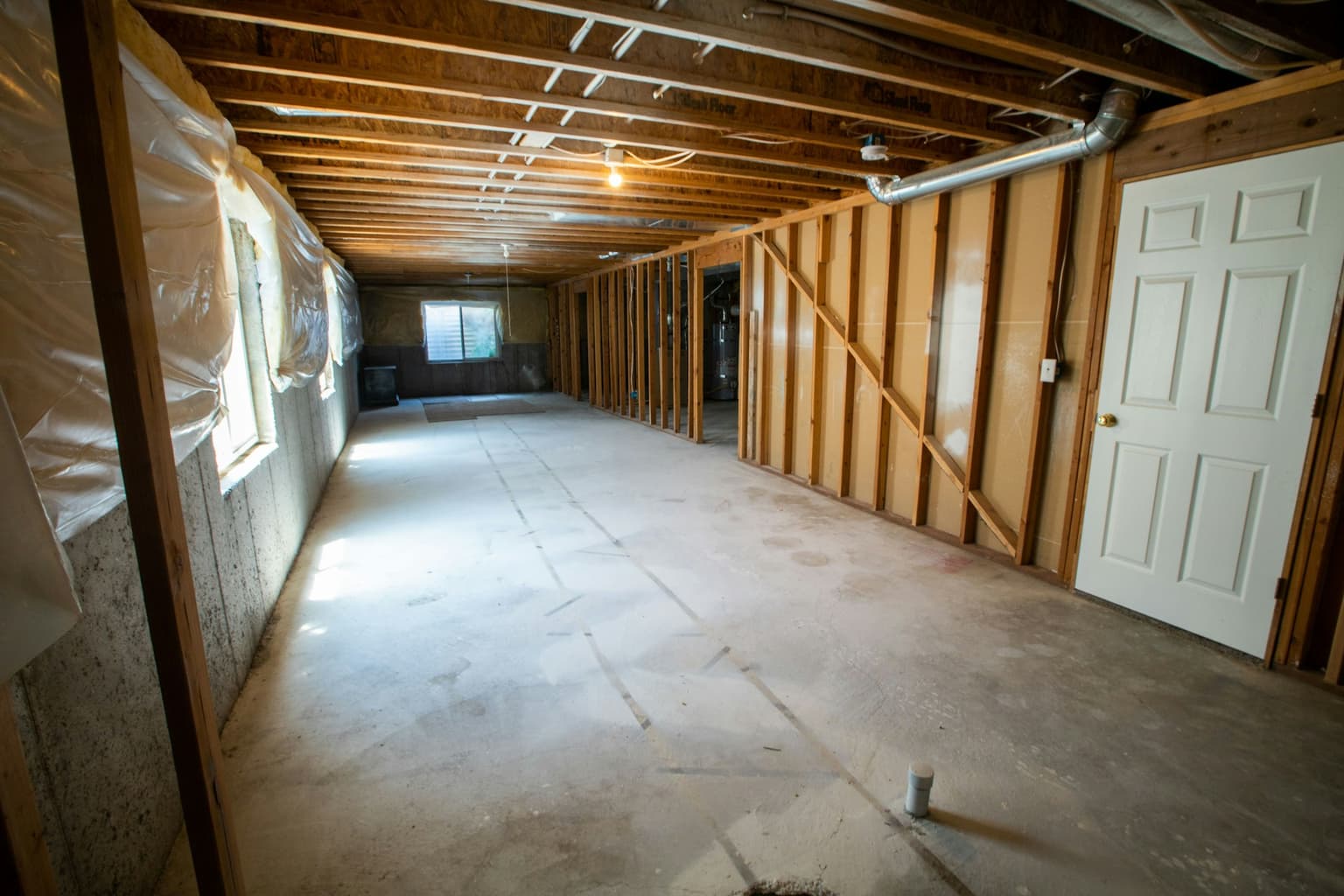
During a major Toronto flood, sewers backed up into finished basements across North York. Sewer water is contaminated, so anything porous it soaks is treated as unsalvageable.
- Extracted the standing water and removed the soaked flooring and drywall
- Cleaned and disinfected the exposed framing and concrete
- Checked framing and slab with moisture meters until they read dry
- Installed new drywall and flooring
Basements rebuilt with new walls and floors, documented for the insurance claim.
Sewage backup cleanupHeavily contaminated basement rebuilt as a new finished space
Where sewage sat longer or reached the furnace room, the damage went past the floor: walls, mechanical equipment and finishes were all affected.
- Removed contaminated flooring, walls and finishes
- Repaired or replaced affected HVAC components and ductwork
- Disinfected and dried the structure, confirmed with moisture readings
- Rebuilt the basement as a brand-new finished space
One crew handled the job from extraction through HVAC, walls, flooring and final finish.
Flooded basement cleanupBasement kitchen replaced after contaminated water
Cabinets, counters and lower finishes soak up contaminated water, and in some homes the flood reached a basement kitchen.
- Assessed how far the contamination reached before deciding what to keep
- Removed the affected cabinets, flooring and lower walls
- Dried and verified the structure with moisture meters
- Installed a new kitchen along with the walls and flooring
How much we replace depends on how contaminated the space is, not on a fixed package.
Reconstruction after a lossSources and limits
Official references checked for this guide
- Electrical Safety Authority — Flood safety
- ESA — Guideline for electrical installations exposed to water
- Health Canada — Flood cleanup and indoor air quality
- Government of Canada — What to do after a flood
This guide is general property-restoration information, not legal, insurance, medical, electrical, or engineering advice. Conditions and program rules can change; confirm decisions with the relevant authority and qualified professional.