What's included
- 24/7 emergency dispatch
- Hazard and access triage
- Water extraction & sewage containment
- Debris and damaged-material removal
- Soot, silt and contamination cleaning
- Structural drying with recorded readings
- Photo and moisture documentation
- Board-up, tarping and the rebuild
Triage comes before cleanup
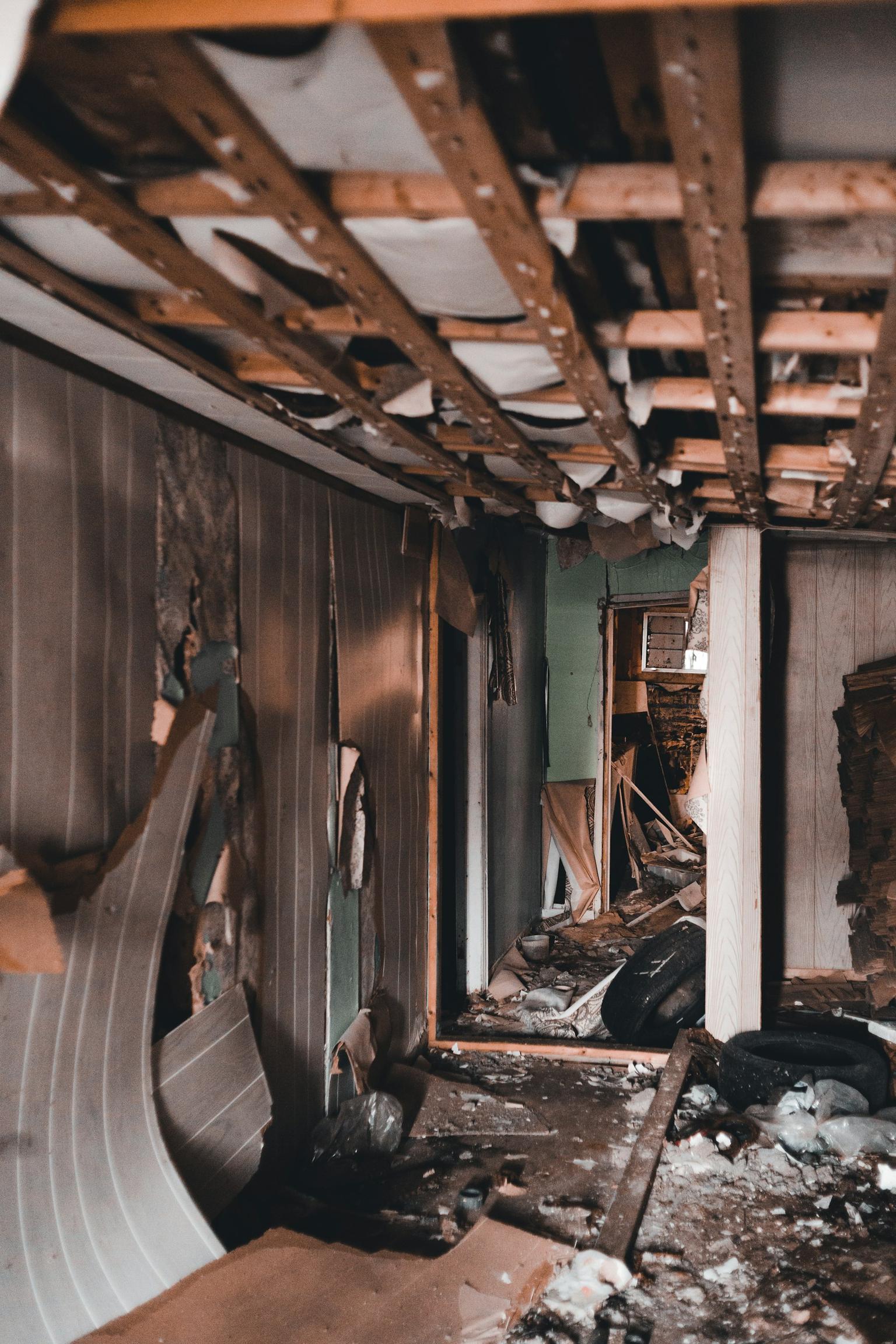
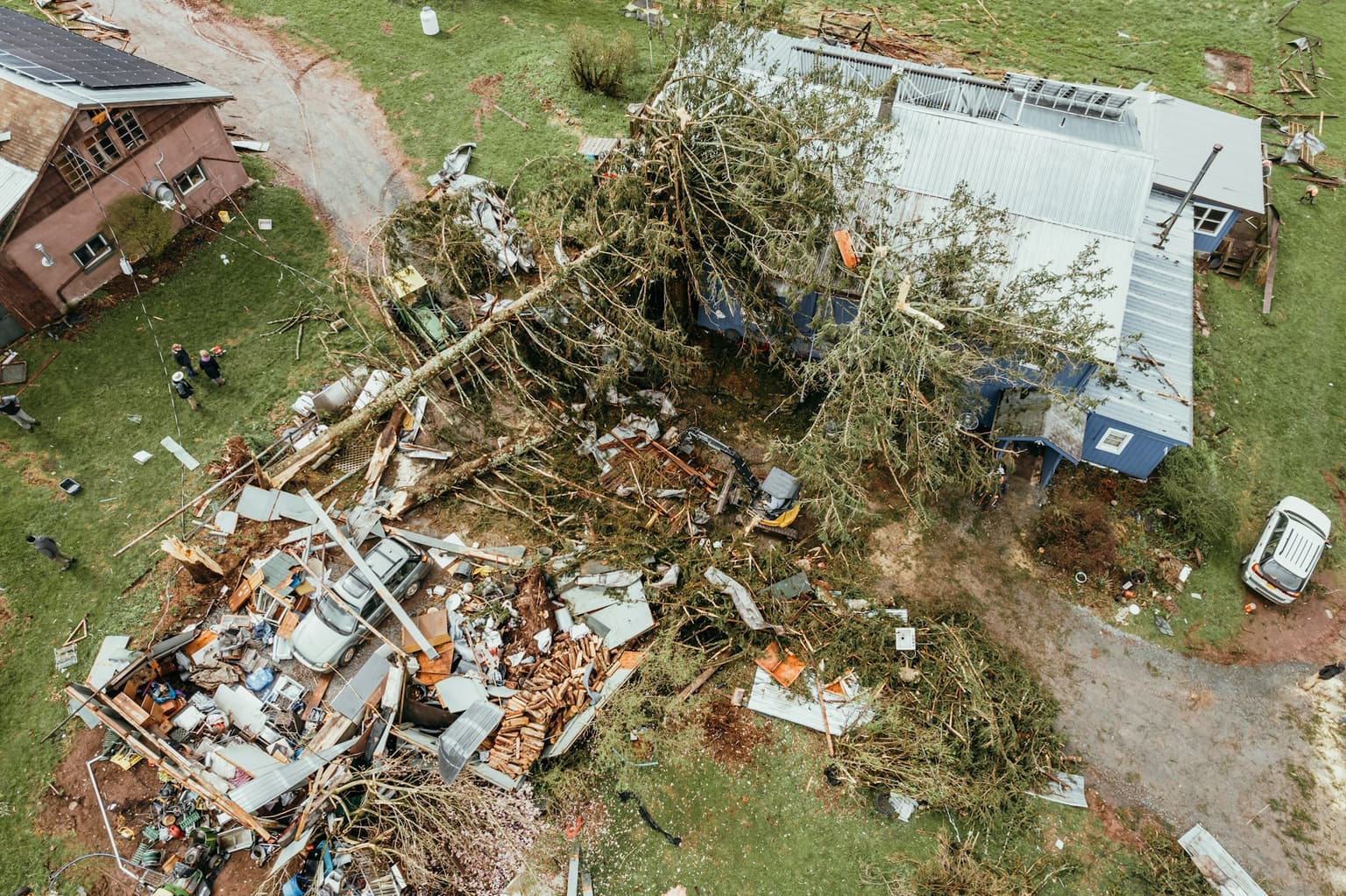
The first hour of a disaster cleanup is about order, not speed. Nobody goes in until fire, police or utility crews have released the building. The City of Toronto's after-an-emergency guidance is to leave gas, electricity and water off until the utility has checked them, and, if you smell gas, to open doors and windows and call Enbridge Gas from a neighbour's phone. After that comes whatever is still causing damage, such as an open roof or water still running, then contamination, then drying, then the rebuild. Doing those steps out of order costs money: drying a room before the sewage is out, or cleaning soot before the roof is closed, means doing it twice. Openings in roofs, walls, windows and doors are closed first by our emergency board-up service in Toronto.
Mixed losses get sorted, not lumped together
Clean water from a burst pipe, sewage from a floor drain, silt from overland water and soot from a fire are cleaned differently, and porous materials touched by sewage are removed rather than dried. We map which rooms took which kind of damage and keep them separate in the file, because insurers often treat them under different parts of a policy. Sewer backup, for example, usually needs its own coverage on the policy. When a floor drain or toilet is the source, see sewage backup cleanup in Toronto.
What leaves the house, and what stays
Disaster debris is evidence until the adjuster has seen it. We photograph and list damaged materials and belongings before anything goes in a bin, separate what can be cleaned from what cannot, and keep salvageable contents away from the work area. The exception is food: after a power outage or contamination, the City of Toronto advises throwing out anything spoiled or doubtful. Belongings worth saving go through contents restoration and pack-out.
Emergency cleanup ends when the structure is dry
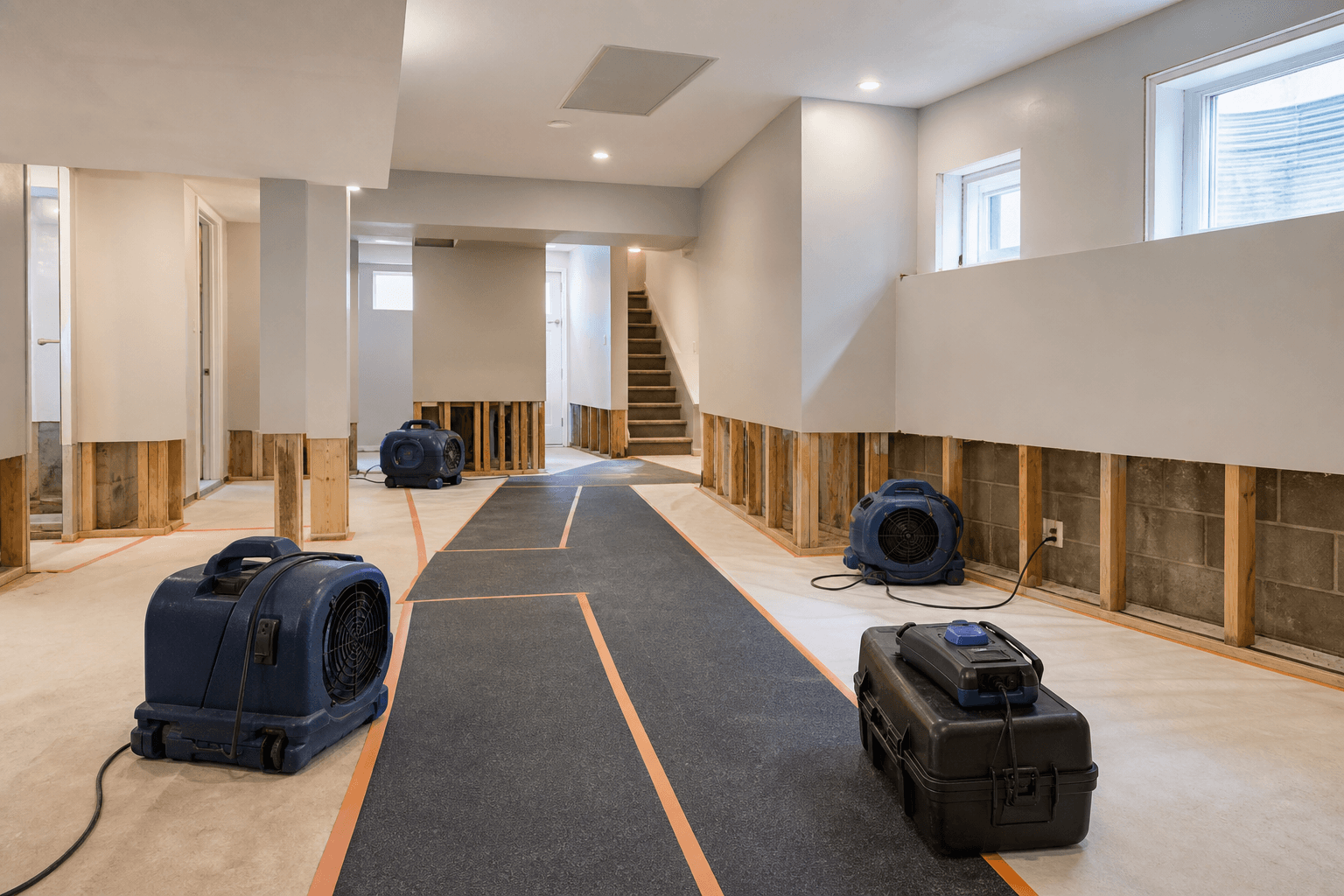
A room can look clean and still hold water in the framing, the subfloor or the insulation behind the drywall. We run drying equipment and take moisture readings until the materials reach their dry targets, and record each reading so the rebuild starts on a dry structure and the claim shows why the equipment stayed as long as it did. More on how that works: structural drying and dehumidification.
Disaster recovery: insurance first, then public programs
Recovery money almost always starts with your own policy, so call your insurer or broker as soon as people are safe. The City of Toronto says it can arrange short-term accommodation after an emergency for residents who have no insurance coverage or cannot access it. For natural disasters, the Province runs Disaster Recovery Assistance for Ontarians (DRAO), which helps with essential property where insurance is not available, but only in areas the Province has activated after a specific event. DRAO is not meant to replace insurance, and it covers sewer backup only for low-income households, so check the Province's list of activated areas before counting on it. We document the loss for your adjuster as part of our insurance restoration work.
The cleanup crew stays for the rebuild
Once the structure is dry and clean, the same company scopes and rebuilds what was removed: framing, insulation, drywall, flooring, trim and paint. The demolition photos and moisture records from the cleanup become the rebuild plan, so nothing has to be rediscovered by a second contractor. See property damage reconstruction in Toronto.
From our work
How these jobs usually go
Each summary combines details from many similar jobs we have done. They describe our real work, not one specific property, and leave out homeowner details for privacy. These examples come from our flood and sewer-backup jobs.
Sewer backup in finished North York basements after a major Toronto flood
During a major Toronto flood, sewers backed up into finished basements across North York. Sewer water is contaminated, so anything porous it soaks is treated as unsalvageable.
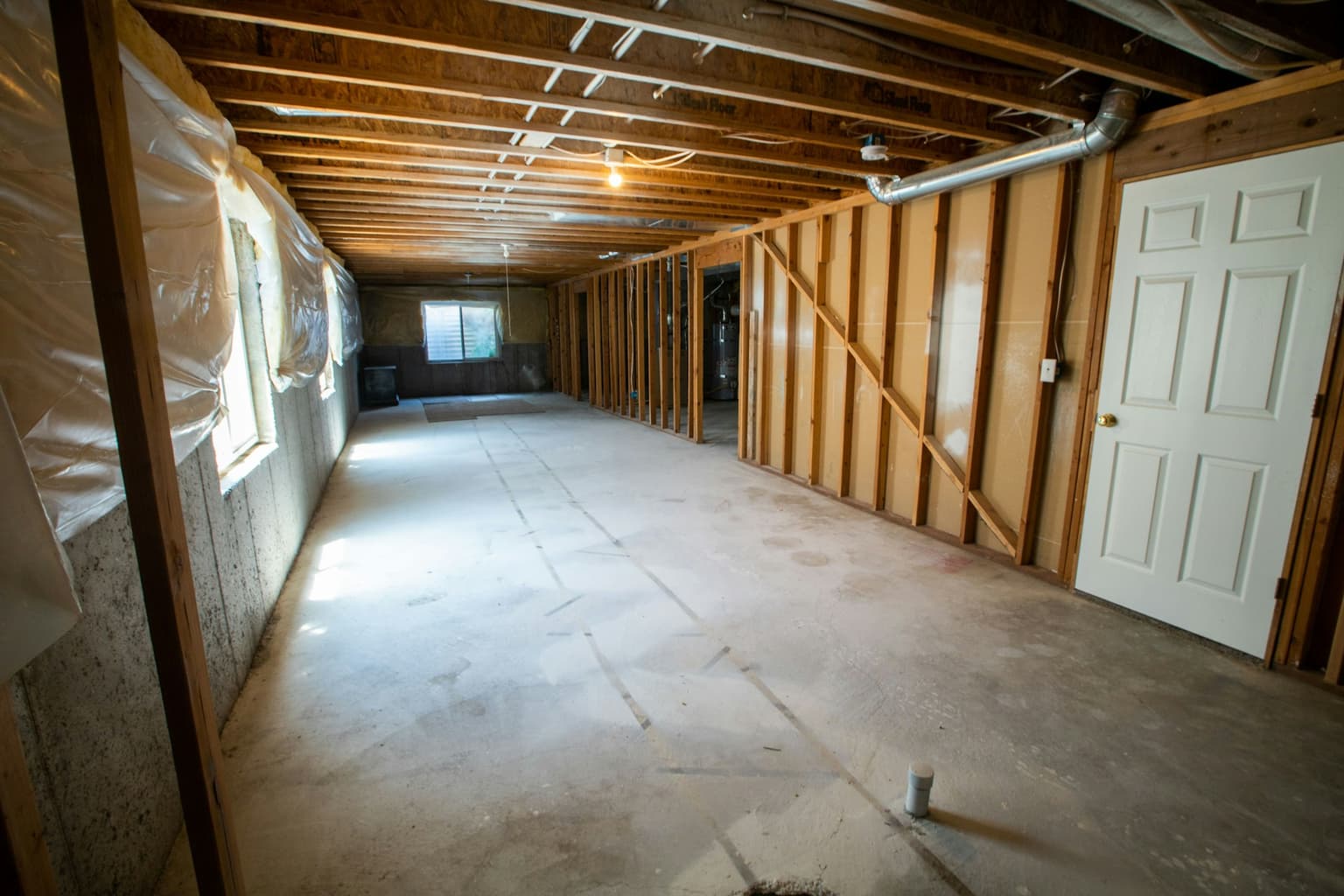
- Extracted the standing water and removed the soaked flooring and drywall
- Cleaned and disinfected the exposed framing and concrete
- Checked framing and slab with moisture meters until they read dry
- Installed new drywall and flooring
Basements rebuilt with new walls and floors, documented for the insurance claim.
Sewage backup cleanupHeavily contaminated basement rebuilt as a new finished space
Where sewage sat longer or reached the furnace room, the damage went past the floor: walls, mechanical equipment and finishes were all affected.
- Removed contaminated flooring, walls and finishes
- Repaired or replaced affected HVAC components and ductwork
- Disinfected and dried the structure, confirmed with moisture readings
- Rebuilt the basement as a brand-new finished space
One crew handled the job from extraction through HVAC, walls, flooring and final finish.
Flooded basement cleanupBasement kitchen replaced after contaminated water
Cabinets, counters and lower finishes soak up contaminated water, and in some homes the flood reached a basement kitchen.
- Assessed how far the contamination reached before deciding what to keep
- Removed the affected cabinets, flooring and lower walls
- Dried and verified the structure with moisture meters
- Installed a new kitchen along with the walls and flooring
How much we replace depends on how contaminated the space is, not on a fixed package.
Reconstruction after a lossOfficial guidance used on this page
- City of Toronto: After an emergency
- Government of Ontario: Apply for disaster recovery assistance (DRAO)
Coverage and safety requirements vary by property and policy. Confirm decisions with the relevant authority, licensed trade, and your insurance representative.
Frequently asked questions
- What is the difference between disaster cleanup and disaster restoration?
- Disaster cleanup is the emergency phase: making the building safe, removing water, debris and contaminated material, cleaning and drying. Disaster restoration includes that and the repairs that bring the property back. We do both under one file, so you do not need a second company for the rebuild.
- Do you provide emergency cleanup services at night and on weekends?
- Yes. We answer 24/7 and dispatch immediately for active water, fire damage and sewage, and typically arrive within an hour anywhere in Toronto and the GTA. Call (437) 800-3677.
- Should I start throwing out damaged things before you arrive?
- No. Photograph everything and leave damaged materials and belongings in place, because the adjuster needs to see them. The exception is spoiled or contaminated food, which the City of Toronto advises throwing out.
- Does Ontario's disaster recovery program pay for cleanup?
- Disaster Recovery Assistance for Ontarians applies only after a natural disaster in an area the Province has activated, and only where insurance is not available. It helps homeowners (primary residence only), residential tenants, small owner-operated businesses and farms, and not-for-profits with essential property. Apply to your insurer first; the program is not a substitute for coverage.
- Do you handle disaster cleanup for commercial buildings?
- Yes. Offices, stores, warehouses and multi-unit buildings get the same triage, cleanup and drying, planned around tenants, access and the people still using the space.